Posted 5/9/2026
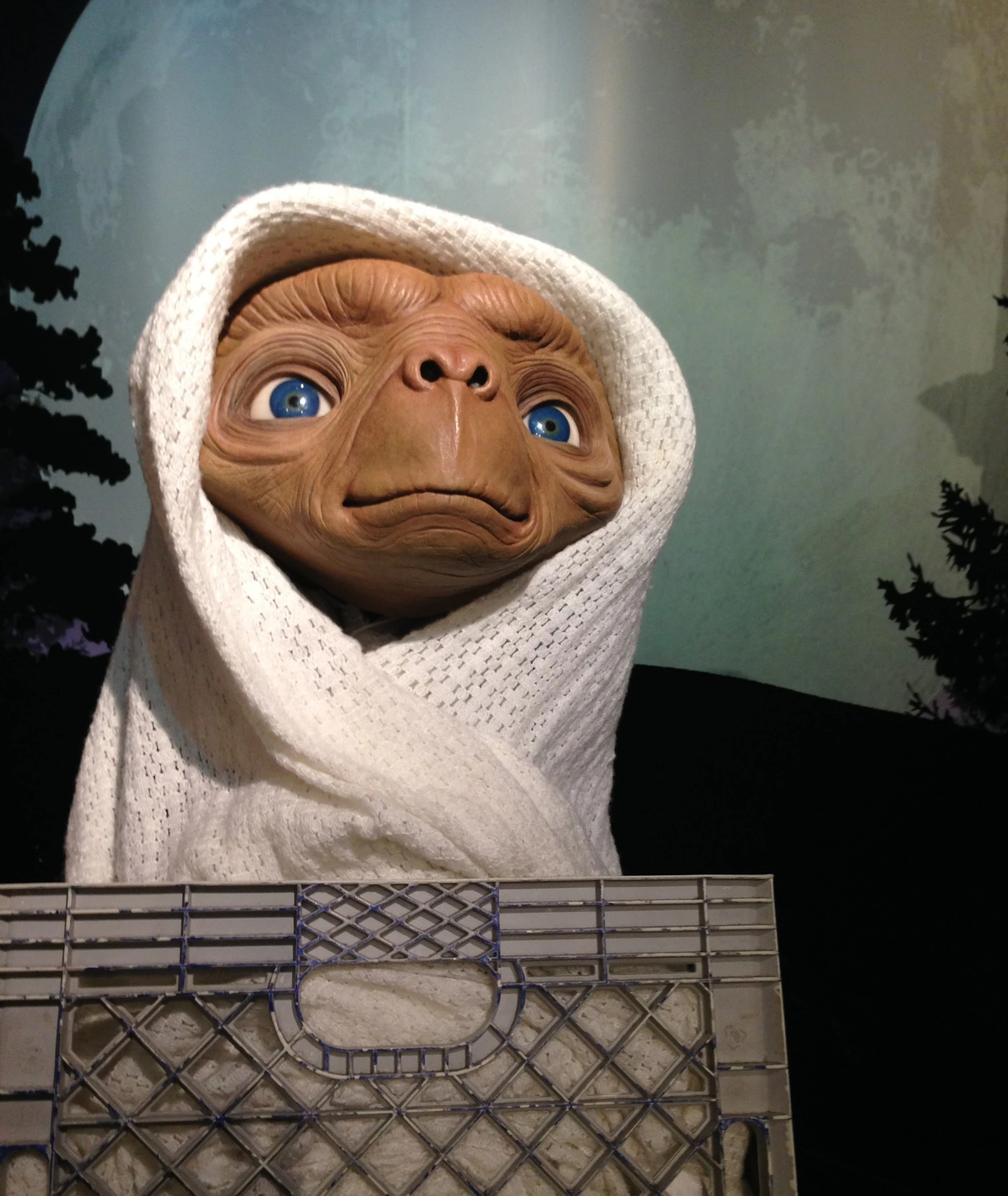
People have wondered for some time now whether or not life exists outside of our planet, planet Earth. Maybe in our own solar system, our galaxy, and possibly the universe. With the universe being so vast, containing billions of galaxies, with each galaxy containing hundreds of billions of stars, there could be even more planets orbiting these stars; consequently, scientists hypothesize that there is a high probability that we are not alone.
Life on Earth is found in extreme conditions such as the depths of the Mariana Trench, at extreme pressures equal to about 8 tons per square inch; the frigid expanse of Antarctica, where winter temperatures can drop below -76° Fahrenheit (-60° Celsius); and life has been found in hydrothermal vents, where temperatures can range from 140° to 750° Fahrenheit (60° to 400° Celsius). Given these phenomena, it's not illogical to conclude that life could survive in harsh conditions on other planets.
The real question is whether or not intelligent life is out there, but is it one comparable to mankind or one more advanced? Perhaps years ahead of his time, H.G. Wells penned the novel "The War of the Worlds," first published in 1898, where aliens from Mars attempt an invasion of our civilization. As the novel gained popularity, along with those like it, the idea was firmly planted in people's minds.
Roswell, New Mexico, became famous after it was said that a UFO (unidentified flying object) crashed there in 1947, but what really crashed is a mystery to most. By the 1950s and 1960s, speculation abounded, and people began talking more of UFOs, proposing these could be visitors from another world.
By the 1970s, men claimed to have been abducted by aliens, with prominent cases including Travis Walton in 1975 (Arizona) and Calvin Parker/Charles Hickson in 1973 (Mississippi). Their accounts have largely been dismissed as hoaxes, but nevertheless, there are many similar stories. Some have even floated the idea that we ourselves could be the byproduct of ancient alien civilizations.
Fascination with the possibility of intelligent alien life spawned television shows such as My Favorite Martian, Star Trek, Mork and Mindy, A.L.F., The X-Files, a television series named V, and the list goes on. Blockbuster movies were created with depictions of intelligent alien life, including Alien, Close Encounters of the Third Kind, E.T., Predator, Independence Day, and countless others. Hollywood has profited immensely off of people's intrigue about aliens even though it could all be deeply rooted in propaganda.

The Air Force reportedly used fake UFO stories to mask classified aircraft projects (like the F-117 Nighthawk) at Area 51. The Pentagon documented that a fictional "Yankee Blue" alien investigation unit was used in hazing rituals and as a misinformation tactic to create confusion. Projects like "7 Lambs" were used to manipulate individuals into believing that terrestrial, classified technology was of extraterrestrial origin. The government has now released the files they have on UFOs (unidentified flying objects), later renamed UAPs (unidentified aerial phenomena), in an effort to be transparent with the public, according to President Donald Trump... Click Here.
It might be a reasonable line of thinking to conclude that if the government had the slightest inkling extraterrestrial life existed, it would more than likely invest enormous resources in an effort to determine its origin or find out its technological capabilities. After all, NASA (the National Aeronautics and Space Administration) wasn't formed to investigate the possibility that aliens exist. It was created to counter the then-Soviet Union after their launch of the first satellite, Sputnik, which started the "race for space," prompted by a fear of falling behind militarily. If the same ideology pervades, a similar thought process might follow. There is an old adage that reminds us to believe none of what we hear and half of what we see.