Posted 3/19/2026
President Trump has single-handedly taken the nation to war. When Congress had the power to limit his authority, they failed to act. As a result, a school full of children was bombed in Iran, killing 168 little girls and 14 teachers. President Trump immediately denied involvement despite the fact that remnants of a Tomahawk missile were discovered in the rubble—a weapon known to be exclusively possessed by the United States. Despite Trump's unilateral actions, he is actually within his rights as the commander-in-chief.
The War Powers Act, formally the War Powers Resolution of 1973, is a federal law designed to check the president's power to commit U.S. armed forces to conflicts without congressional authorization. The Trump administration began bombing a sovereign nation in what they characterized as a preemptive measure to prevent a nation he considered hostile towards the U.S. from acquiring nuclear weapons. However, attacking a country without provocation is largely considered illegal.
The War Powers Act was intended to require the President to report troop deployments within 48 hours and necessitates Congressional approval to continue involvement beyond 60-90 days. It was designed to ensure the "collective judgment" of both Congress and the president applies to initiating hostilities.
The president must outline the reasons, the authority, and the scope within two days if forces are dispatched into hostile territory—effectively, this has been done. Secretary of Defense Pete Hegseth said Operation Epic Fury's purpose focused on obliterating ballistic missile systems in Iran, destroying the Iranian navy, degrading infrastructure, and preventing nuclear capabilities.

The United States is currently following a trajectory that invites renewed scrutiny of its foundational design. We are observing a pattern where a single individual can declare war, often operating ahead of the deliberative process long considered a primary safeguard. When an administration initiates military action without prior congressional authorization, it raises a fundamental question about the state of our democratic checks and balances.
Legal analysts increasingly argue that the War Powers Act may be a relic of a different era. Modern military capabilities move at a speed the 1973 authors of the War Powers Resolution could not have anticipated. When troops are deployed anywhere without a formal case being presented to Congress, the administration operates within a statutory window that creates irreversible "facts on the ground." This leaves the legislature in a difficult position: either rubber-stamp an ongoing conflict or face the instability of an immediate withdrawal.
As these operations expand, the structural challenge becomes clear: if current oversight mechanisms are unable to facilitate a debate before hostilities begin, it forces a difficult assessment. If the framework intended to safeguard the nation can no longer serve as a constraint on unilateral action, we are left to determine for ourselves where the authority to initiate conflict truly belongs.
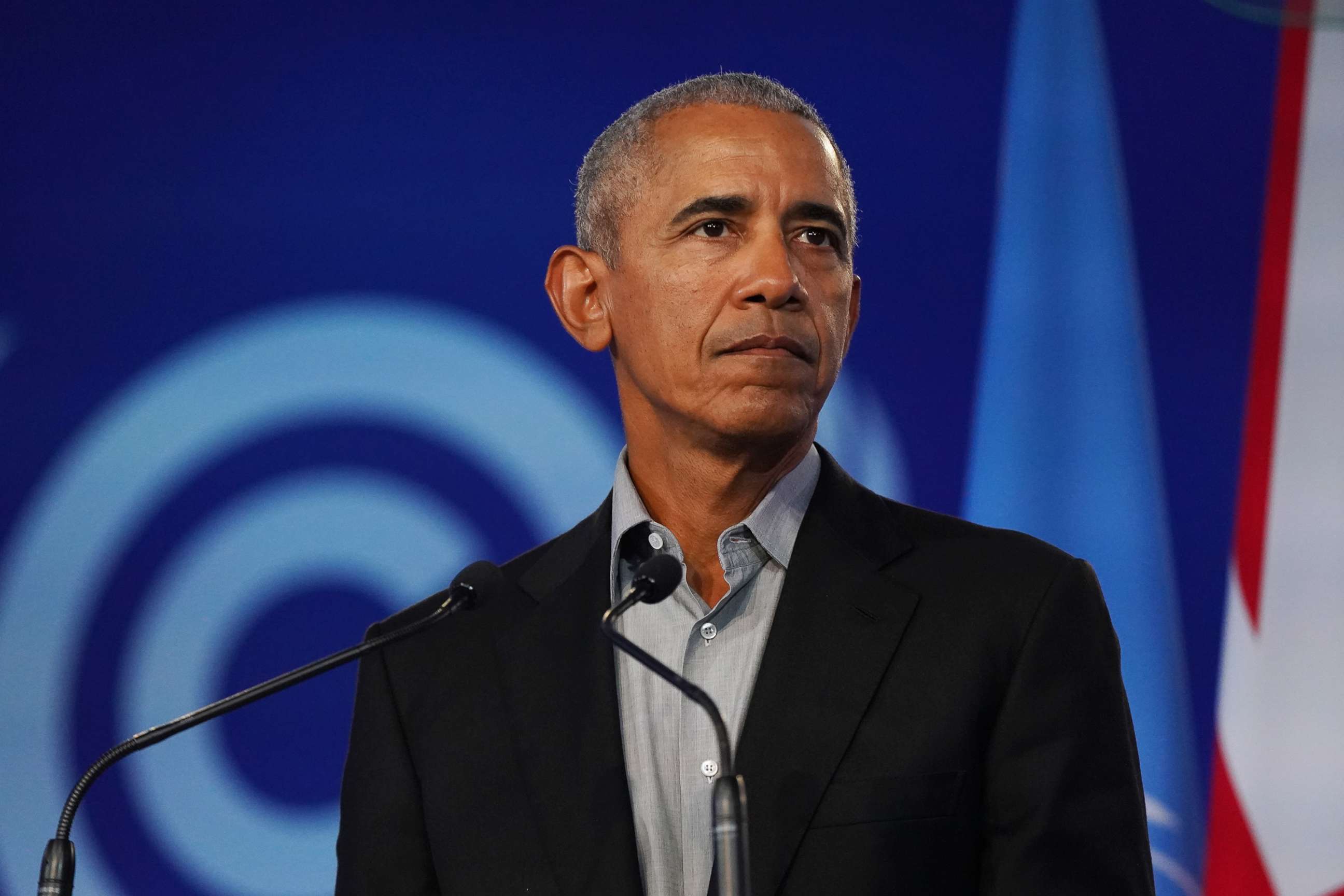
One person can act on behalf of the country, even if the country is totally against their ideology. Former President Barack Obama was complicit in the murder of Libyan ruler Muammar Gaddafi... Click Here. The same pretense was used as justification—he was involved in terrorism, he tortured and killed his own people, etc. Libya did make great strides under Gaddafi's leadership despite the reputation bestowed upon him.
No justification could be found for the Obama administration bombing the water system that was created for the people of Libya. As a result, the country was left in turmoil, and the reputation of the United States suffered tremendously. Gaddafi was brutalized, sodomized, and summarily executed by rebels after fleeing from his convoy, which was struck by a U.S. drone. Presidents can now move faster than the law can react.
It is rumored President Trump has ambitions to attack Cuba, following what transpired in Venezuela and what's happening in Iran—Greenland is also on the proverbial menu. The system of checks and balances in the United States is a bedrock principle to prevent the president from seeking to be a conqueror—behaving as a robber baron with the might of the U.S. military at his disposal. Adolf Hitler is a reminder of the atrocities that can be committed when an individual and those around him/her have their own agenda in mind.