Posted 11/21/2026
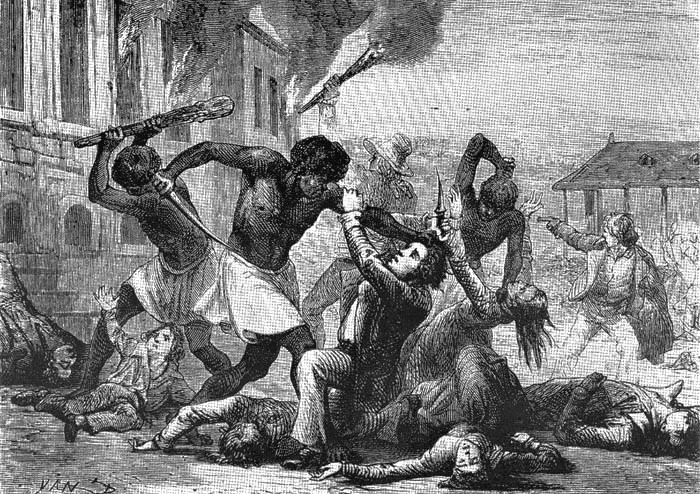
To understand why the United Nations—and a growing roster of foreign countries—remains so deeply entangled in Haiti’s political affairs, it helps to look back more than two centuries. After winning a historic revolution against France in 1804 to become the world’s first independent Black republic, Haiti was immediately punished for its freedom. In 1825, under the threat of French warships, the young nation was extorted into accepting a preposterous "independence debt" of 150 million gold francs—later reduced to 90 million francs—to compensate former French slaveholders. It took Haiti until 1947, 122 years, to pay off that financial stranglehold, setting a precedent of foreign interference and engineered instability that has echoed across generations.
Measured by its gold content, the reduced indemnity represents nearly $3 billion at today's valuation. But the true economic cost extended far beyond the gold itself. Haiti was forced to borrow from French financial institutions, incurring additional interest and banking commissions, diverting national resources away from its own development. One economic study estimated that the money transferred could have added more than $21 billion to Haiti's economy had it remained and grown within the country. The full cost is immeasurable: it includes more than a century of opportunities that Haiti might otherwise have had to build infrastructure, develop industries, invest in education, and accumulate national wealth.
Fast-forward to modern times, and Haiti’s sovereignty remains a flashpoint. On July 7, 2021, President Jovenel Moïse was assassinated at his private residence by a squad of mercenaries. The killing occurred amid fierce political turmoil and widespread resentment from critics who viewed Moïse's administration as a U.S.-backed puppet government. In the power vacuum that followed, armed Haitian factions expanded their control over large areas of Port-au-Prince, prompting Haiti's transitional authorities and international partners to pursue their dissolution.
Alongside the Gang Suppression Force, El Salvador was invited by the United Nations Security Council to enter the fray, summoning President Nayib Bukele, whose government has pursued an aggressive campaign against gangs at home. His arrest of tens of thousands of suspected gang members in El Salvador employed brutal tactics. The United Nations provides logistical and operational support. Following an October 2026 ambush in which four Salvadoran aviation technicians went missing, Bukele sent a much larger military contingent to Haiti. Reports placed the deployment at approximately 2,000 soldiers, with the number expected to reach 2,500. This further entrenched a foreign military presence in a country whose security and political affairs have repeatedly been shaped by outside powers. Although the intervention is presented as assistance to Haiti, the presence of foreign troops amounts to an occupation.
In times past, the United Nations has largely stood on the sidelines of several other violent conflicts raging across the globe, yet Haiti consistently attracts international intervention, foreign troops, and Security Council mandates. In Rwanda in 1994, decades of European colonial favoritism toward the Tutsi minority boiled over into 100 days of genocide that killed roughly 800,000 people (estimates are as many as 1,000,000). Rather than surging troops to stop the slaughter, the United Nations slashed its peacekeeping presence on the ground, reducing its force from 2,165 personnel to just 270 as the slaughter continued.
A civil war raging in Sudan since 2023 has produced a death toll that some estimate at 150,000 or more, displacing approximately 9 million people inside the country and pushing 33.7 million into desperate humanitarian need. UN officials have described Sudan as an "atrocities laboratory," citing starvation, attacks on civilians, and deadly drone strikes. Yet no UN peacekeeping force has been deployed to protect the population from the warring parties.
A similar pattern has unfolded across the Sahel. Military coups, insurgencies, and deteriorating relations with Western governments prompted foreign forces to leave several countries in the region. In Mali, the transitional government requested the departure of the United Nations presence, and the Security Council subsequently ended its mandate. Across the region, the withdrawal of international forces has not brought an end to armed conflict or the insecurity experienced by local populations.
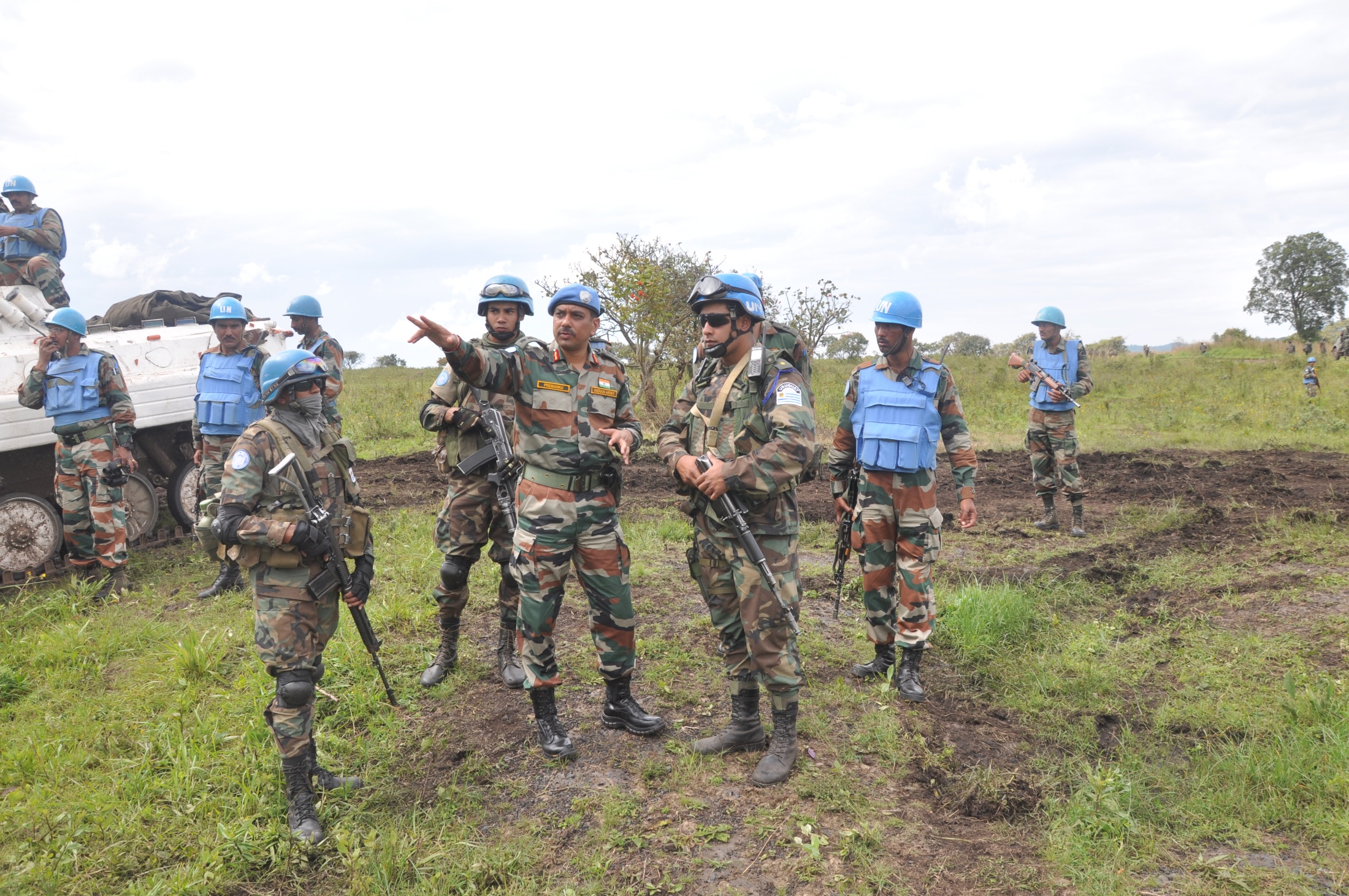
A different but equally revealing pattern played out in the Democratic Republic of the Congo, a nation sitting on trillions in cobalt, copper, and coltan that drew a multi-decade, billion-dollar-a-year UN peacekeeping mission (MONUSCO). While UN interventions historically secured the political capital of Kinshasa and kept the southern copper and cobalt belt in Katanga unified, peacekeepers failed to stop armed militias from terrorizing local populations across the eastern provinces. The takeaway is hard to miss: when stability was required for industrial extraction, order was enforced; where artisanal minerals could still be extracted amid chaos, civilians were left to suffer. More troubling, the United Nations itself documented the systematic exploitation of Congolese natural resources by foreign military forces and commercial networks while the conflict continued...Why have UN peacekeepers been in DR Congo for 65 years?
Following United Nations Security Council Resolution 1973, NATO assumed command of the military campaign against Muammar Gaddafi's government in North Africa in 2011, and the outcome was not stability. NATO's air campaign substantially weakened Gaddafi's forces and helped opposition fighters advance. On October 20, NATO aircraft struck a convoy leaving Sirte in which Gaddafi was traveling. Gaddafi was subsequently captured and killed by Libyan opposition fighters. His government's collapse was followed by years of rival factions, militias, and political fragmentation, turning a country once known for relatively high living standards into a battleground.
Beyond history and politics, Haiti possesses two strategic assets that make it particularly important to global powers: geography and untapped natural resources. Haiti occupies the eastern flank of the Windward Passage, the maritime corridor where shipping moves between the Atlantic Ocean and the Caribbean Sea, including traffic traveling to and from the Panama Canal. Sitting roughly 700 miles from Florida, Haiti is important to Western Hemisphere trade and security routes. Beneath its rugged northeastern mountains lies another potential source of international interest: exploratory drilling by U.S. and Canadian companies has indicated deposits of gold, copper, and silver with an estimated value of approximately $20 billion, underscoring the natural wealth that remains largely undeveloped.
In the Western Hemisphere, the world's first independent Black republic has repeatedly struggled to chart its own political destiny without foreign overseers, imposed political arrangements, or outside armies operating on its soil. Despite their immense natural wealth, African and Caribbean nations are frequently depicted as impoverished, famine-plagued, war-torn wastelands. Far less attention is given to continued foreign interference, and the United Nations is routinely presented under the banner of peacekeeping, stability, and humanitarian assistance.